Routes, scanner fields, charging, traffic rules and exception handling defined as testable requirements.
Sortation · AMR · AGV fleets
Tompkins Robotics sortation programs start from measurable loads, routes and acceptance gates
Map receiving, storage, picking, sortation and shipping against load units, SKU velocity, peak windows and WMS/WCS/PLC ownership. Tompkins Robotics keeps robot and sorter evaluation attached to the material-flow path your distribution center actually runs—so induction balance, SLAM navigation corridors, safety laser scanner fields and AGV loops are compared with the same testable gates for order lines per hour.
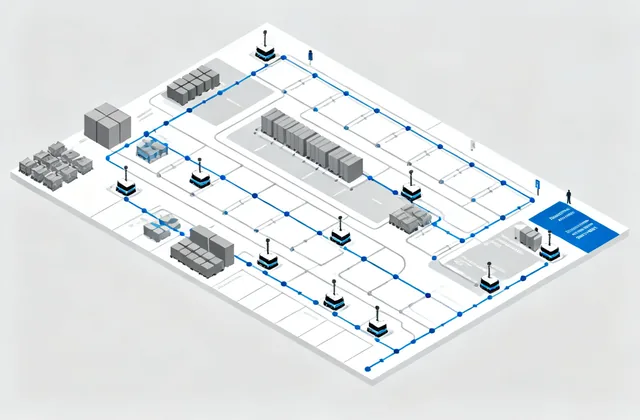
- Receive
- Store
- Pick
- Sort
- Ship
WMS, WCS, WES, PLC and fleet-manager ownership for commands, alarms and FAT/SAT evidence.
Rate checked against SKU mix, order profile, peak window, accumulation and exception recovery.
Cutover windows, fallback states and measurable acceptance gates that protect live waves.
Equipment families
Tompkins Robotics families evaluated as one material-flow boundary
Product conversations stay attached to payload envelopes, sortation divert accuracy, fleet management ownership and the control layer that must own each handshake.
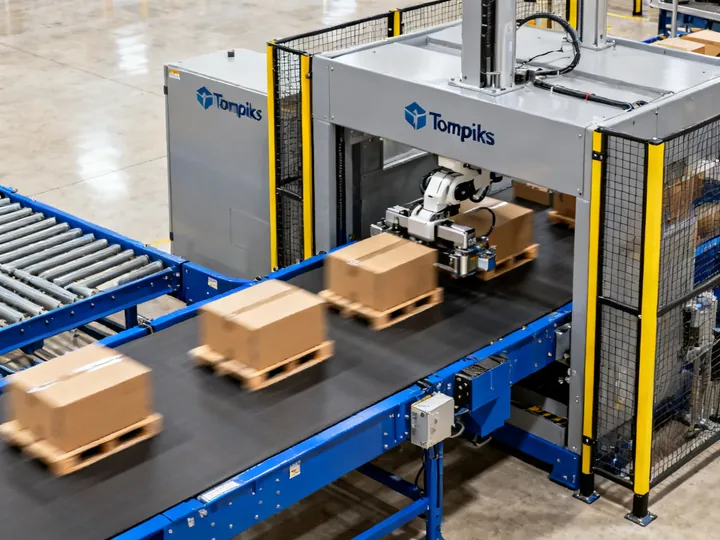
Robotic sortation systems
Induction balance, divert accuracy and recirculation limits sized to order-line structure—not isolated cartons-per-hour claims without exception recovery.
SortationDivertInduction
Review catalog →
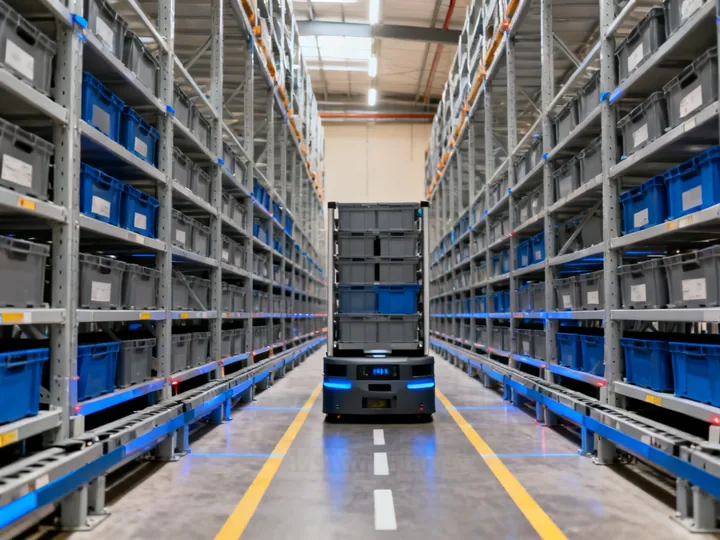
Autonomous mobile robots
AMR fleets sized to load units, route demand and buffer occupancy—paired with charging windows and traffic priority rules.
AMRSLAMFleet
Review catalog →
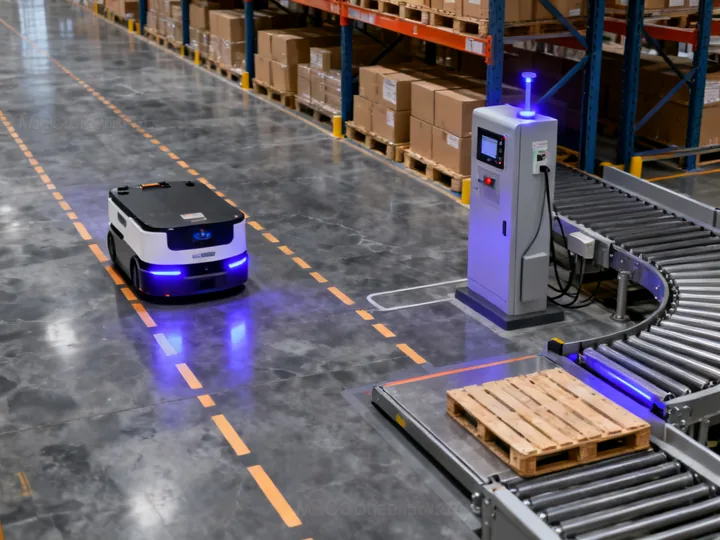
AGV transport platforms
Guided missions, charging windows and traffic priority stay paired with the lane’s peak window and host acknowledgement rules.
AGVChargeTraffic
Review catalog →
Grouped evaluation specs
Freeze Tompkins Robotics inputs before brochure rates become design rates
Each group isolates one decision layer so payload, flow, controls and acceptance stay separable during technical review. Planning ranges are scaffolds, not certified throughput claims.
Load & route envelope
Load unitMass, footprint, underside, overhang, center of gravity and orientation at each handoff
Aisle geometryClear width, turning envelope, doors, floor joints and intervention access
Human interactionCrossings, restricted zones, scanner field overlaps and manual release points
Flow & peak profile
SKU / order mixVelocity bands, replenishment competition and carton versus tote versus pallet share
Peak windowDuration, recurrence, backlog policy and recovery time after blocked paths
BuffersInduction depth, divert occupancy and station-unavailable response
Controls & acceptance
Interface ownershipWMS, WCS, WES, PLC and fleet-manager command, ack, timeout and alarm owners
Transaction definitionWhat completes a move, divert or order line including confirmation states
FAT / SAT evidenceScenario mix, measurement window, fault cases and deviation owners
Operating profiles
Industries where Tompkins Robotics starts from the flow model
Compare SKU depth, peak factor, temperature band and pallet/tote mix before locking robotics and sortation architecture.
| Vertical | SKU depth | Peak factor | Temperature | Load-unit mix |
|---|---|---|---|---|
| E-commerce fulfillment | Very high | 1.6–2.4× | Ambient | Carton / polybag heavy |
| Grocery distribution | High | 1.4–1.9× | Mixed zones | Tote + case + pallet |
| Parcel & hub induction | High | 1.5–2.2× | Ambient | Parcel / polybag |
| Manufacturing supply | Medium | 1.2–1.6× | Ambient | Pallet / tote to line |
| Multi-client DCs | Client-variable | Stacked peaks | Usually ambient | Mixed by contract |
E-commerce fulfillment
SKU depth very high · Peak 1.6–2.4× · Ambient · Carton / polybag heavy
Grocery distribution
SKU depth high · Peak 1.4–1.9× · Mixed zones · Tote + case + pallet
Parcel & hub induction
SKU depth high · Peak 1.5–2.2× · Ambient · Parcel / polybag
Manufacturing supply
SKU depth medium · Peak 1.2–1.6× · Ambient · Pallet / tote to line
Multi-client DCs
Client-variable depth · Stacked peaks · Usually ambient · Mixed by contract
Bring Tompkins Robotics an RFQ package, not a brochure request
Share load units, peak windows, interface owners and site constraints. We respond with a structured evaluation path—fleet safety, controls matrix, throughput validation and acceptance gates included.